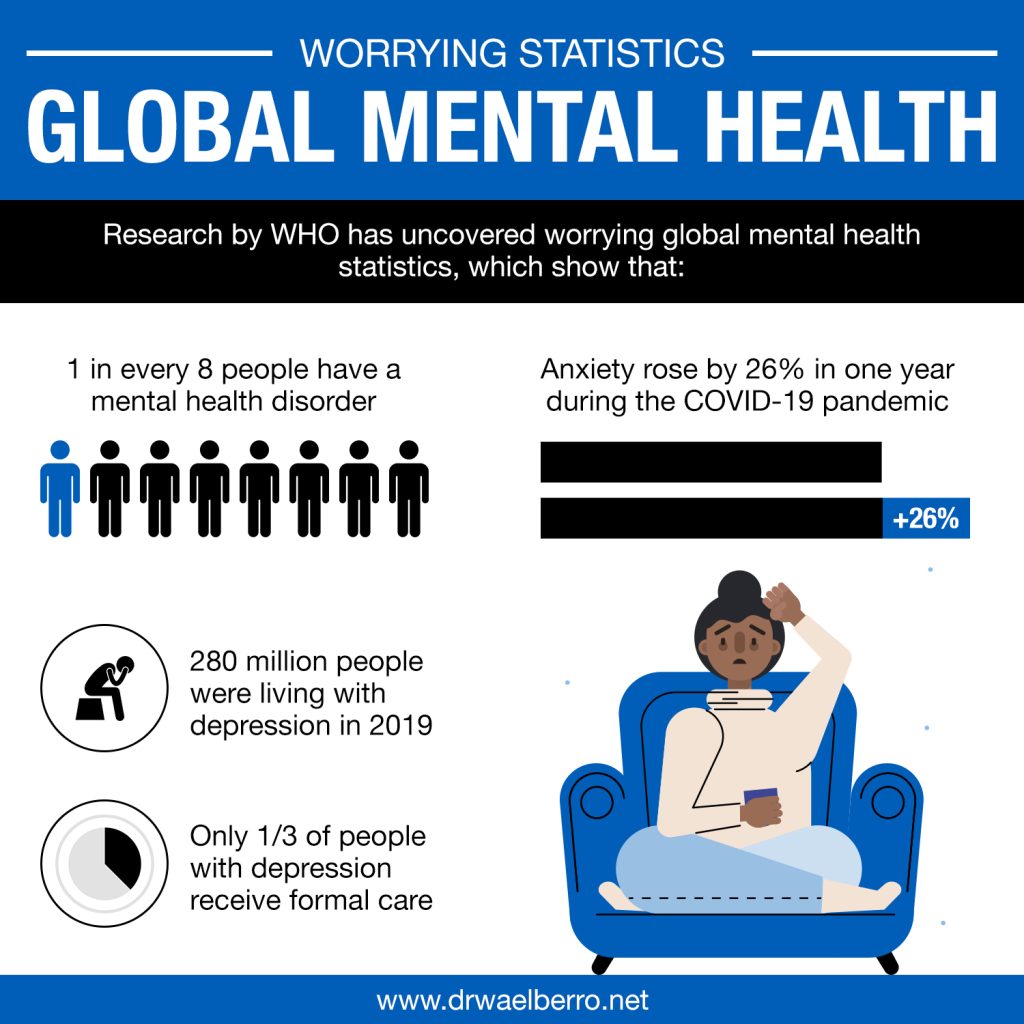
There is currently a global mental health epidemic ongoing, and it is influencing how people think about themselves and how they’re affected by the world around them. It’s now more important than ever to understand what it means to have positive mental wellbeing, as well as how to combat the harmful thoughts, feelings and situations that detract from wellness.
Mental health advocates – like primary care physician Dr Wael Berro – routinely promote mental health awareness in an effort to boost public mental wellbeing. Individuals with poor mental wellbeing don’t always have a mental health condition, but those who do face a greater amount of stigma and discrimination. To learn more about this, see the embedded PDF.
The best way to tackle wider mental health concerns is to improve mental wellbeing. It’s just as important as physical wellbeing because it influences how we approach everyday life, cope with hardships and reach our full potential. The key is building resilience. It’s not always possible to remove stressors from professional or personal environments; however, the mind can be trained to better manage these situations.
Resilient people typically make small but strategic lifestyle choices that nourish their minds and raise their self-esteem. Simple things like being more physically active, getting better sleep and eating a balanced diet do wonderful things to the body and brain. Our minds are nourished by healthy lifestyle choices, putting us in the best possible place to improve our mental wellbeing.
However, relying on physical improvement isn’t enough. The mind also needs to be directly engaged to encourage positive thoughts and emotions. Practising mindfulness is an effective habit that forces an individual to pay attention to the present moment, analyse their feelings and get in touch with the world. This makes it easier to determine the cause of a low mental state and become more self-aware.
This newfound self-awareness is often what encourages those struggling with their mental wellbeing to seek support, which is incredibly important in our current climate of poor mental health. Soon enough, they develop healthy coping mechanisms. These may include learning new skills, which gives a person more purpose, and investing in relationships, which creates a sense of belonging.
Individuals who are kind to themselves have better resilience and more awareness of their own mental wellbeing. The crux is recognising the triggers of low mood and poor mental health and actively working to combat them. Stress impacts mental wellbeing in a devastating way, but it can be managed, and developing these healthy habits is the simplest way to keep negative feelings at bay.